Bill 190 Compliance Is No Longer Optional. The Risk Is Real, and the Clock Is Ticking.
December 11, 2025
•
6
min to read
Bill 190 Compliance Is No Longer Optional. The Risk Is Real, and the Clock Is Ticking.

December 11, 2025
•
6
min to read

Bill 190 Compliance Is No Longer Optional. The Risk Is Real, and the Clock Is Ticking.
December 11, 2025
•
6
min to read
Property managers and janitorial operators across Ontario now face a hard regulatory deadline that carries real financial consequences. Bill 190 formally changes washroom maintenance from a best practice into a legal obligation under the Occupational Health and Safety Act. Regulators will begin enforcing full compliance through audits starting January 1, 2026. Companies that delay action now expose themselves to fines, lost contracts, and legal liability.This is no longer about preparing for a future law. This is about closing a compliance gap that already exists inside many buildings today.
What Bill 190 Actually Requires in Practice
Bill 190 mandates that every workplace in Ontario provide clean and sanitary washroom facilities for all workers, including contract staff and temporary workers. Employers must:
- Clean washrooms at least once per shift
- Increase cleaning frequency in high-traffic environments.
- Document cleaning activity with date and time records
- Retain those records in a way that workers and inspectors can easily access
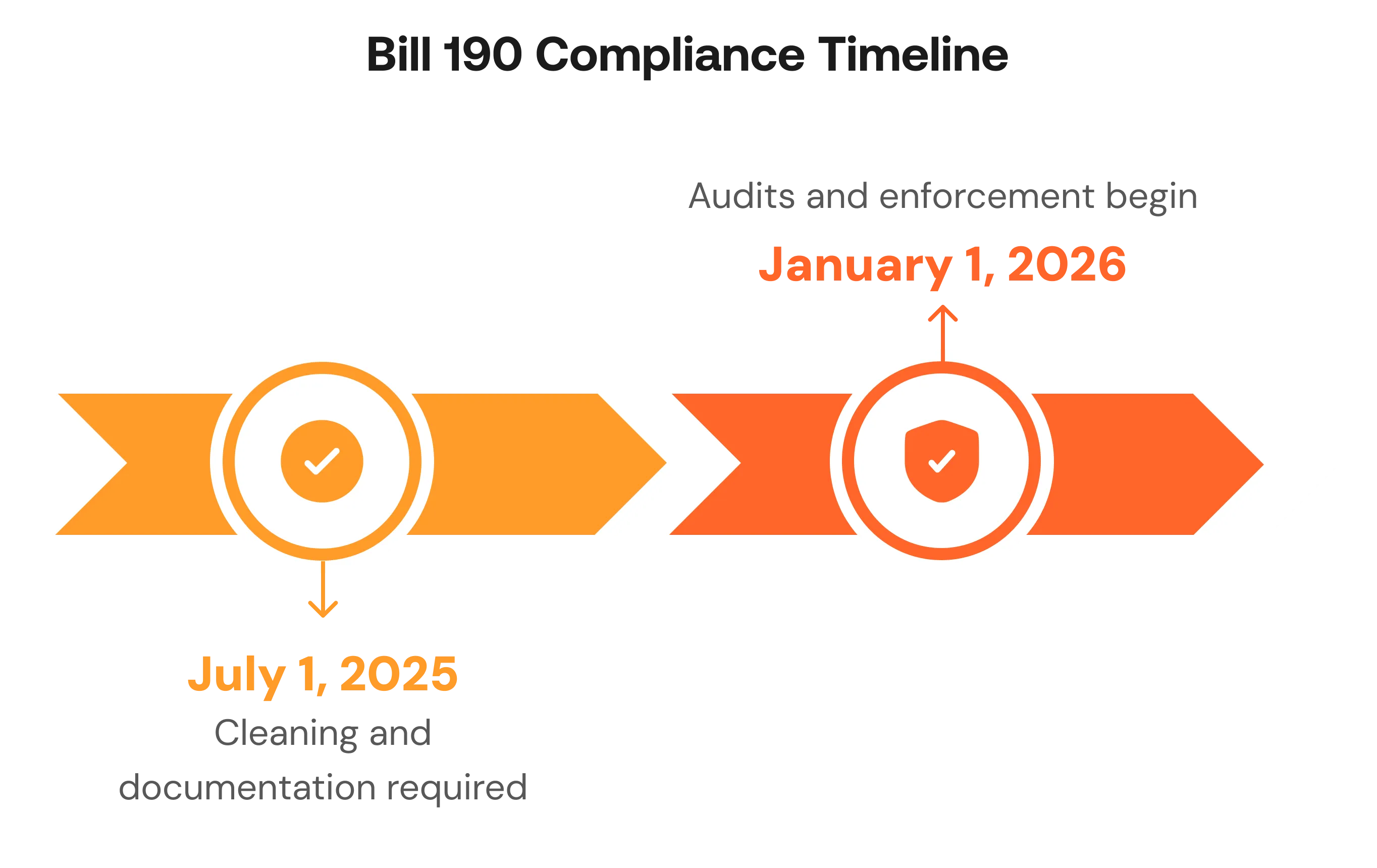
The regulation becomes fully enforceable on January 1, 2026. Inspectors can request proof of compliance at any time after that date. If a company cannot immediately produce verifiable records, the inspector can issue orders and trigger penalties.
Companies that treat this as a paperwork exercise misunderstand the intent of the law. Regulators expect real, provable sanitation activity, not retroactive documentation.
The Financial Risk Is Large and the Operational Risk Is Worse
Bill 190 creates direct financial exposure. Employers face fines of up to $100,000 for violations. That figure does not include the indirect costs that follow an inspection failure. Failed audits force operational shutdowns, emergency process changes, and immediate vendor reviews.
Property managers carry an additional layer of exposure. When a building fails an inspection, the liability does not stop with the cleaning vendor. It reflects directly on the property owner and management firm. Large real estate operators do not tolerate recurring compliance failures; they remove underperforming vendors quickly.
Janitorial providers now compete on compliance credibility, not just price and service quality. A company that cannot produce automated, tamper-proof logs increasingly struggles to qualify for enterprise contracts. Simply put, janitorial providers that look past the requirements of Bill 190 are at risk of losing revenue.
The Manual Logbook Model Already Fails Under Audit Conditions
Many organizations still rely on paper logbooks, wall charts, or shift checklists. That model fails under audit pressure because it depends on human consistency under time constraints. Staff forget to sign logs, pages tear, disappear, or are filled out incorrectly. Supervisors are also able to backfill entries before or after the fact, introducing a level of subversion. What’s worse, is inspectors will recognize these patterns immediately.
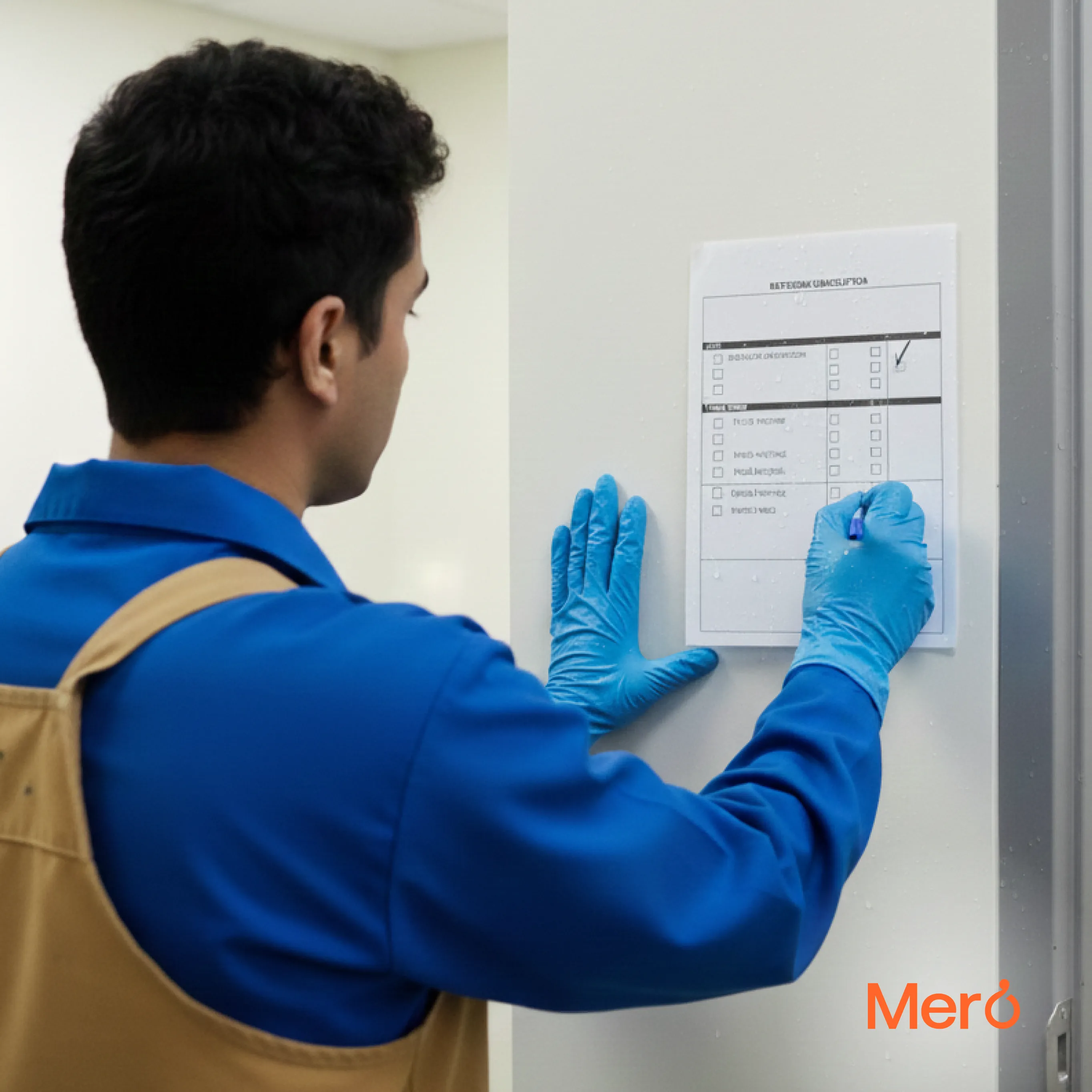
One cleaner described the impact of switching to automated tracking in plain terms:
That experience reflects the broader reality, as Mero’s automation removes human error from regulatory enforcement. Manual systems rely on perfect human behavior under pressure, and regulators never design laws around perfect humans.
Property Managers Now Drive Compliance From the Top
Property managers now treat Bill 190 as a portfolio-level risk, not a cleaning detail. Large firms already push vendors toward automated systems because they cannot afford audit failures across dozens or hundreds of buildings.
Janitorial companies increasingly hear the same message during procurement conversations. A property manager recommends a specific compliance platform and instructs vendors to align with that system before onboarding. Some vendors now receive referrals explicitly tied to compliance readiness. Many of Mero’s customers are property management organizations, opting to utilize Mero for the higher quality data produced than other solutions.
Compliance no longer acts as a sales advantage. It now acts as a baseline requirement.
Why Companies Must Act Before 2026 Instead of Reacting After
July 1, 2025 already triggered the requirement to maintain clean and sanitary washrooms with documented proof. January 1, 2026 activates full audit enforcement. Companies that delay implementation risk training chaos, procurement delays, and emergency compliance spending under regulatory pressure.
Automation requires operational change. That change takes onboarding time, field testing, and internal adoption. Companies that wait until inspectors begin auditing will not have the runway to stabilize their processes before exposure.
Early adopters control their rollout pace. Late adopters absorb regulatory stress in real time.
What Real Bill 190 Compliance Looks Like in 2025 and Beyond
Modern compliance systems track cleaner presence automatically, generate timestamped logs without manual input, store records in secure digital environments, and expose those records instantly through QR codes or web portals. Supervisors gain visibility into dwell time, coverage gaps, and service consistency. Property managers gain defensible documentation across every washroom in their portfolio.
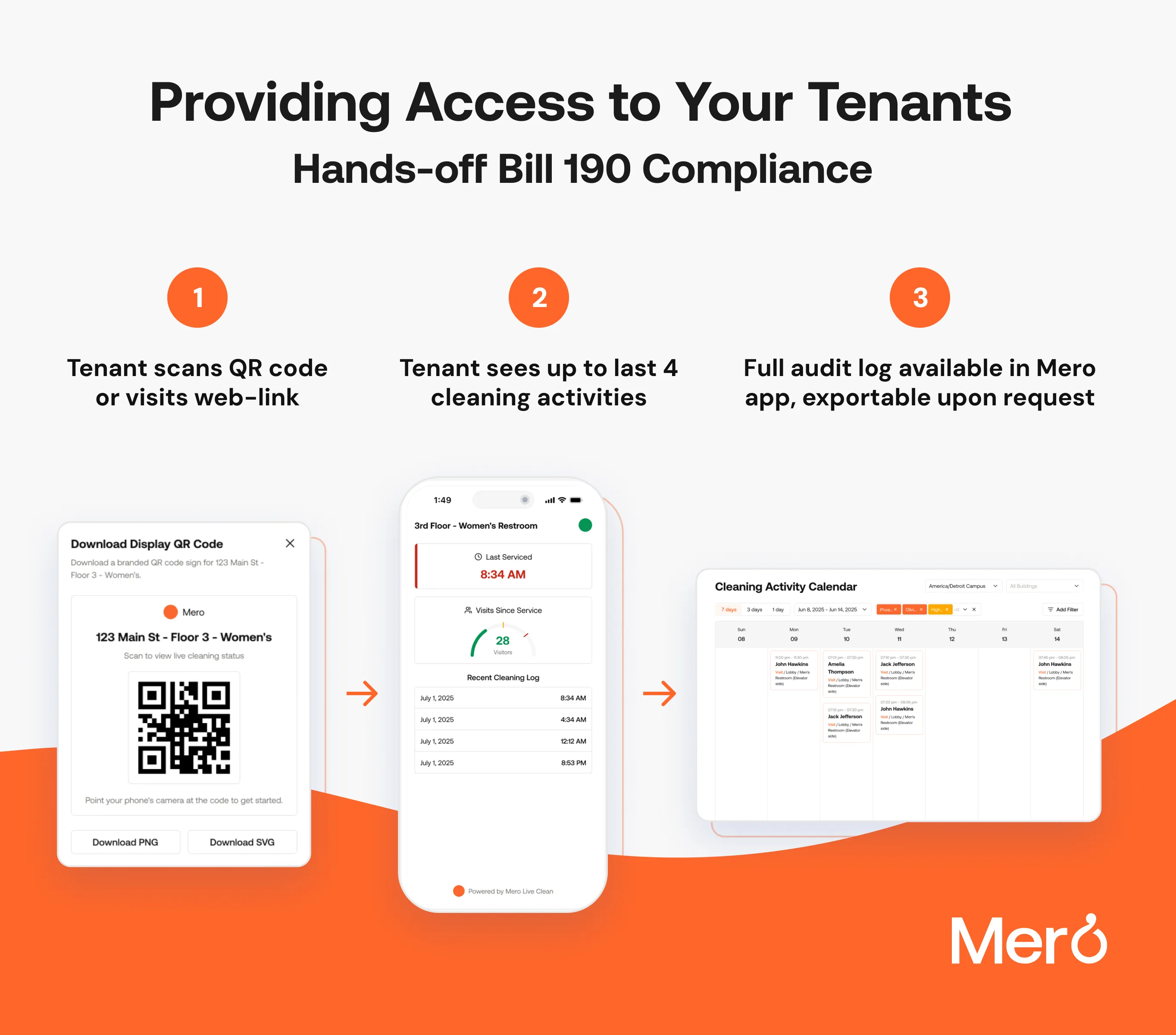
This model transforms compliance from a liability into a managed operational system.
That is exactly why forward-thinking property managers already deploy Mero’s Live Clean platform for automated Bill 190 compliance across their buildings. Bill 190 will not wait for slow adopters, and neither will inspectors, property managers, or your competitors.